DISH Smartbox Technology

DISH Smartbox Technology, Blades & Output Options

Smartbox Pros by Advanced Tech Services is a DISH Smartbox design, installation, and support partner for hotels, senior living communities, healthcare facilities, RV parks, bars and restaurants, and commercial properties. We help owners, operators, IT directors, and maintenance teams understand how Smartbox centralizes TV delivery — and how the right blade and output path fits your property.

Smartbox2 Headend

Modular blade chassis

Satellite

Receiver

Pro:Idiom

QAM

IP

Output

OTA

Local

EVOLVE

OnStream

Analog

Legacy

One headend · Multiple output paths

Centralized TV Delivery

What a DISH Smartbox System Does

A DISH Smartbox system centralizes television delivery from a property headend instead of placing individual receivers or set-top boxes at every TV. Programming is acquired, processed, and distributed from one designed equipment location — then delivered to guest rooms, resident suites, common areas, or commercial displays through the output path that fits your infrastructure.

  • Property-wide distribution from a centralized headend instead of room-by-room receivers
  • Cleaner guest rooms and common areas with fewer visible devices and remotes
  • Flexible output options for coax, IP, analog, streaming, and modern guest entertainment paths
  • Easier troubleshooting when the system is designed, documented, and remotely supported
  • A clearer upgrade path toward IP delivery, casting, and EVOLVE M-Series guest entertainment

Smartbox2 Chassis

Compact Headend Design Built for Real Properties

Smartbox2 represents a modular approach to commercial TV headend design — built to fit property equipment rooms, telco closets, and back-of-house spaces without the clutter of legacy rack-after-rack installations.

Modular blade configuration

Blades slide into the chassis to match what the property actually needs — satellite reception, local channels, output encoding, IP delivery, or guest entertainment integration — rather than forcing one generic layout on every site.

Designed for property deployment

Smartbox Pros evaluates space, power, cooling, access, and cable paths before recommending chassis placement — so the headend is serviceable long after installation day.

Redundancy and power-conscious planning

Where the property requires higher availability, ATS designs power, signal path, and backup considerations into the plan instead of treating the headend as an afterthought.

Remote monitoring and support readiness

When remote management is part of the design, Smartbox Pros can help properties reduce truck rolls, diagnose issues faster, and keep guest-facing TV service stable.

Public-facing descriptions focus on system design concepts. Exact chassis configuration, blade counts, and compatibility depend on property requirements and approved DISH commercial documentation.

Smartbox Blades

Understanding Smartbox Blades

Blades define what the headend acquires, processes, and delivers. Smartbox Pros helps properties choose the combination that matches infrastructure, TVs, and guest experience goals — not a generic package.

Satellite Receiver Blades

What it does
Acquire live satellite programming at the headend so channels can be processed and distributed across the property from a central source.
When it is used
When the property’s channel lineup relies on satellite-delivered programming and a centralized headend is the preferred acquisition path.
Best-fit property type
Hotels, senior living, healthcare, RV parks, and commercial properties using centralized TV delivery.
Why it matters
Central acquisition reduces room clutter and gives ATS a single point to design, document, and support the programming path.

OTA / Local Channel Integration

What it does
Brings local broadcast channels into the Smartbox headend so guests and residents can receive local news, weather, and network affiliates alongside the property’s designed lineup.
When it is used
When local channel availability is required or expected and those channels should be integrated into the same distribution design.
Best-fit property type
Properties where local news and network affiliates are part of the guest or resident experience.
Why it matters
Integrated local channels avoid disconnected add-on solutions and keep the lineup manageable from one headend.

Pro:Idiom / QAM Output

What it does
Encodes and delivers HD programming over coax to compatible hospitality TVs — often without a receiver box in every guest room.
When it is used
When the property has Pro:Idiom-compatible hospitality HDTVs and existing coax infrastructure that can support centralized QAM delivery.
Best-fit property type
Hotels and hospitality environments with compatible in-room TVs and coax already in place.
Why it matters
Cleaner rooms, fewer guest-facing devices, and a familiar HD experience on TVs designed for commercial hospitality use.
Explore Pro:Idiom output

Analog Output

What it does
Supports legacy analog TV delivery where older displays or non-hospitality TVs still need a workable signal path from the headend.
When it is used
When some areas of the property still rely on analog-compatible displays or transitional infrastructure during a phased upgrade.
Best-fit property type
Older properties, mixed TV inventories, back-of-house displays, or transitional upgrade environments.
Why it matters
Lets operators modernize the headend without forcing every display to be replaced on day one.
Explore analog output

IP / Streaming Output

What it does
Distributes TV content over a properly designed property IP network or private TV network instead of traditional coax-only delivery.
When it is used
When the property is network-forward, building new infrastructure, or planning for scalable endpoint delivery over LAN.
Best-fit property type
New construction, renovated properties, and facilities investing in managed network infrastructure.
Why it matters
Creates a flexible foundation for modern endpoints, centralized management, and future guest entertainment upgrades.
Explore IP output

Edge Server Blade / IP-Satellite Integration

What it does
Helps bridge satellite-based headend design with IP-based delivery paths so programming can move through the property on modern network architecture.
When it is used
When the property needs both centralized acquisition and IP distribution — especially in hybrid or multi-building environments.
Best-fit property type
Larger hotels, multi-building campuses, MDU groups, and properties planning IP-first delivery.
Why it matters
Supports a practical migration path without throwing away the value of a centralized Smartbox headend.
Explore IP headend design

EVOLVE M-Series / OnStream Guest Entertainment Path

What it does
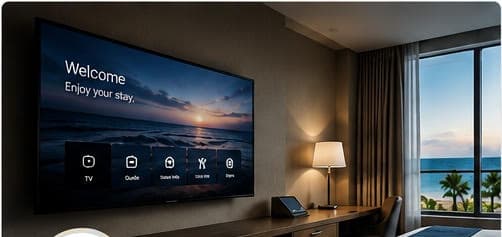
Connects centralized Smartbox design with modern in-room guest entertainment — live TV, apps, casting, property messaging, and a polished guest interface through EVOLVE M-Series powered by OnStream.
When it is used
When the property wants a premium guest entertainment experience beyond traditional linear TV alone.
Best-fit property type
Hotels and hospitality properties prioritizing streaming, casting, personalization, and modern guest UX.
Why it matters
Keeps the headend strategy and guest-facing experience aligned instead of bolting on disconnected streaming solutions.
Explore EVOLVE M-Series

Expert System Design

How ATS Designs the Right Smartbox System

Smartbox Pros does not sell blades in isolation. Advanced Tech Services evaluates the full property — infrastructure, TVs, operations, and future plans — before recommending a Smartbox path.

That design-first approach is why two similar-looking properties can need very different Smartbox configurations — and why ATS documents the plan before installation begins.

  • In-room and common-area TV inventory
  • Coax condition, signal path, and headend location
  • Pro:Idiom compatibility and display capabilities
  • Existing channel lineup and programming expectations
  • Local channel / OTA requirements
  • Internet and managed network readiness
  • Guest, resident, or member experience goals
  • Remote monitoring and support requirements
  • Future upgrade path toward IP, casting, or EVOLVE M-Series

Why It Matters

Why Smartbox Design Matters for Property Owners

The technology decision is also an operations decision. A well-designed Smartbox system affects guest satisfaction, maintenance workload, and long-term capital planning.

  • Fewer boxes, remotes, and visible clutter in guest rooms and common areas
  • Cleaner installs with centralized equipment instead of room-by-room receiver sprawl
  • HD picture quality on displays matched to the chosen output path
  • Easier troubleshooting when the signal path is documented and supported
  • Fewer truck rolls when remote monitoring and support are part of the design
  • A practical upgrade path toward streaming, casting, and EVOLVE M-Series entertainment
  • Better guest, resident, and member experiences without disconnected add-on systems

FAQ

Common questions about DISH Smartbox technology

What is a DISH Smartbox?

A DISH Smartbox is a centralized commercial TV headend platform that acquires, processes, and distributes television programming across a property. Instead of placing a receiver or set-top box at every TV, programming is delivered from a designed headend through the output path that fits the property — such as Pro:Idiom/QAM over coax, IP, analog, or modern guest entertainment integration.

Does every TV need a receiver box?

Not in a well-designed Smartbox system. Many properties use centralized delivery so compatible hospitality TVs receive programming over coax or IP without a guest-room receiver. The exact approach depends on TV compatibility, wiring, and the output path ATS recommends for your property.

Can Smartbox work with existing coax?

Often, yes. Properties with usable coax infrastructure and compatible displays are frequently good candidates for Pro:Idiom/QAM or other coax-based output paths. Smartbox Pros evaluates signal condition, TV inventory, and headend location before recommending coax reuse.

What is Pro:Idiom output?

Pro:Idiom output delivers encrypted hospitality TV programming to compatible commercial HDTVs over coax — typically without a separate receiver box in each guest room. It is a common path for hotels with hospitality-grade TVs already in place.

Can older analog TVs still work?

In many transitional properties, analog output or hybrid designs can keep older displays working while other areas move to HD or IP delivery. ATS helps map which TVs can remain in service and where upgrades make more sense.

Can Smartbox support streaming or IP output?

Yes. Smartbox systems can support IP and streaming-oriented delivery paths when the property network is designed for it. That may include localized streaming output or integration with modern guest entertainment platforms — depending on property goals and infrastructure.

How do we know which blades and output options we need?

Smartbox Pros reviews your TVs, wiring, network, channel lineup, local channel needs, operations model, and upgrade timeline. ATS recommends blades and outputs based on that full picture — not a generic package.

Can Smartbox Pros support the system remotely?

When remote management is included in the design, Smartbox Pros by Advanced Tech Services can help monitor, diagnose, and support the system remotely — reducing downtime and unnecessary on-site visits for many issues.

Can this work with EVOLVE M-Series?

Yes. Many properties combine centralized Smartbox headend design with EVOLVE M-Series powered by OnStream for modern guest entertainment — live TV, apps, casting, and property messaging in one guest-facing experience.

Build the Right Smartbox Path for Your Property

Talk with Smartbox Pros about your TVs, infrastructure, channel lineup, and guest experience goals. Advanced Tech Services will help you understand which Smartbox blades and output options fit — and what a supportable long-term design looks like.